Table of Contents
Information Board 1
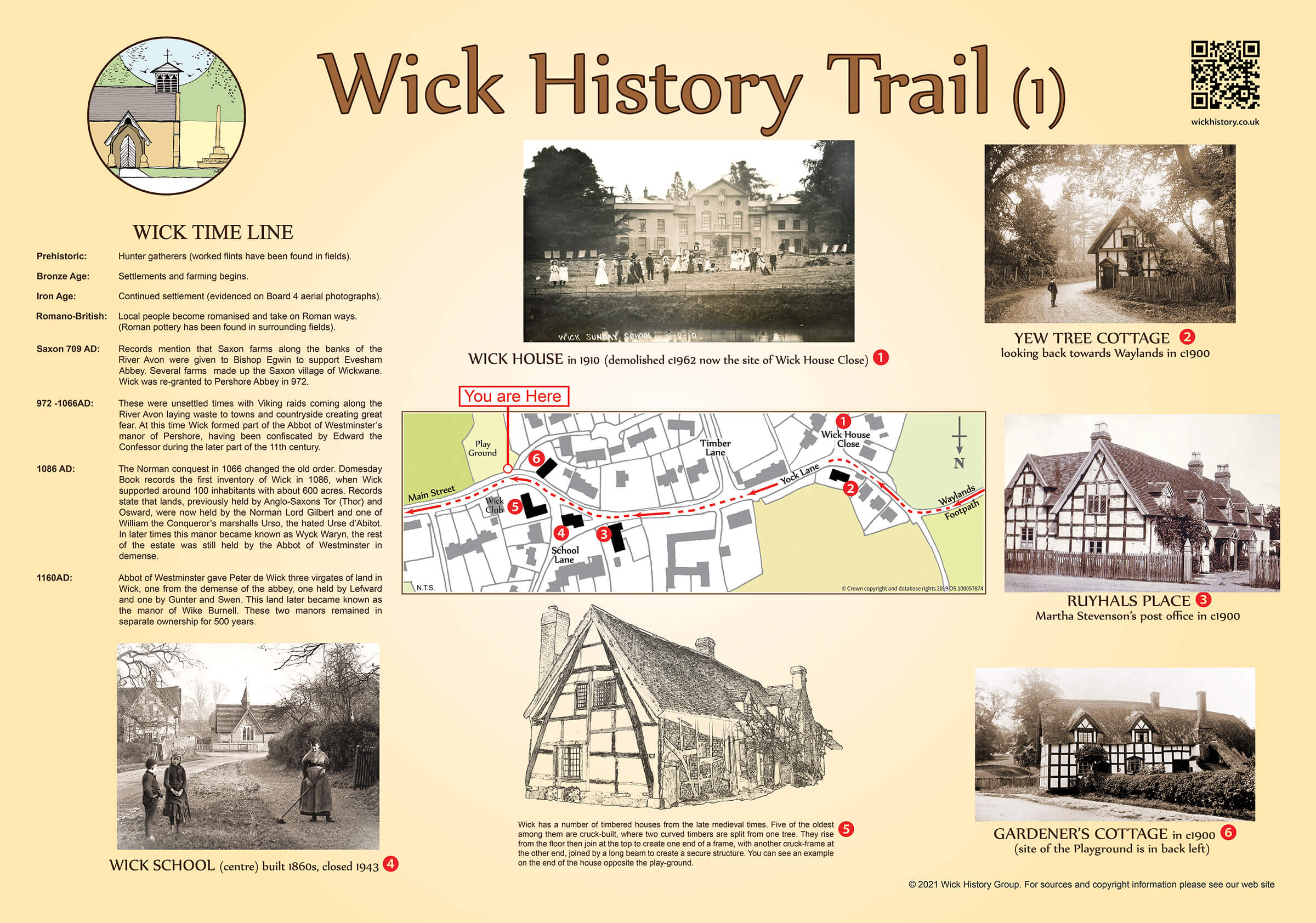
Located on Main Street, by the entrance to the playground (opposite Wick Club).
Wick Timeline (1)
| Prehistoric | Hunter gatherers (worked flints have been found in fields) |
|---|---|
| Bronze Age | Settlements and farming begins. |
| Iron Age | Continued settlement (shown on aerial photographs). |
| Romano-British | Local people become romanised and take on Roman ways. (Roman pottery has been found in surrounding fields). |
| Saxon 709 AD | Records mention that Saxon farms along the banks of the River Avon were given to Bishop Egwin to support Evesham Abbey. Several farms made up the Saxon village of Wickwane. Wick was re-granted to Pershore Abbey in 972. |
| 972 -1066 AD | These were unsettled times with Viking raids coming along the River Avon laying waste to towns and countryside creating great fear. At this time Wick formed part of the Abbot of Westminster’s manor of Pershore, having been confiscated by Edward the Confessor during the later part of the 11th century. |
| 1086 AD | The Norman conquest in 1066 changed the old order.Domesday Book records the first inventory of Wick in 1086, when Wick supported around 100 inhabitants with about 600 acres. Records state that lands, previously held by Anglo-Saxons Tor and Osward, were now held by the Norman lord, Gilbert and one of William the Conqueror’s marshalls, Urso, the hated Urse d’Abitot. In later times this manor became known Wyck Waryn, the rest of the estate was still held by the Abbot of Westminster in demense. |
| 1160 AD | Abbot of Westminster gave Peter de Wick three virgates of land in Wick, one from the demense of the abbey, one held by Lefward and one by Gunter and Swen. This land later became known as the manor of Wike Burnell. These two manors remained in separate ownership for 500 years. |
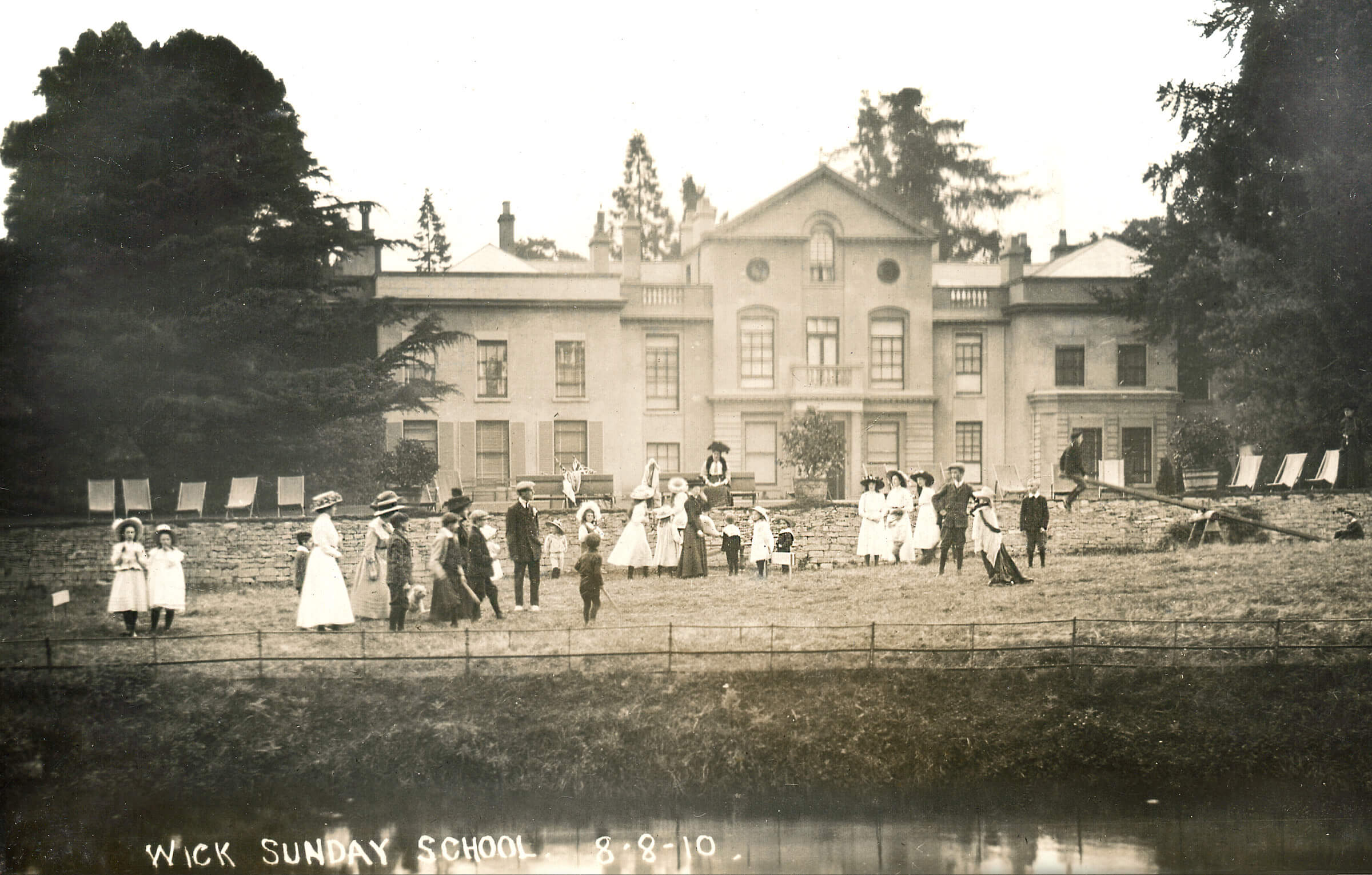
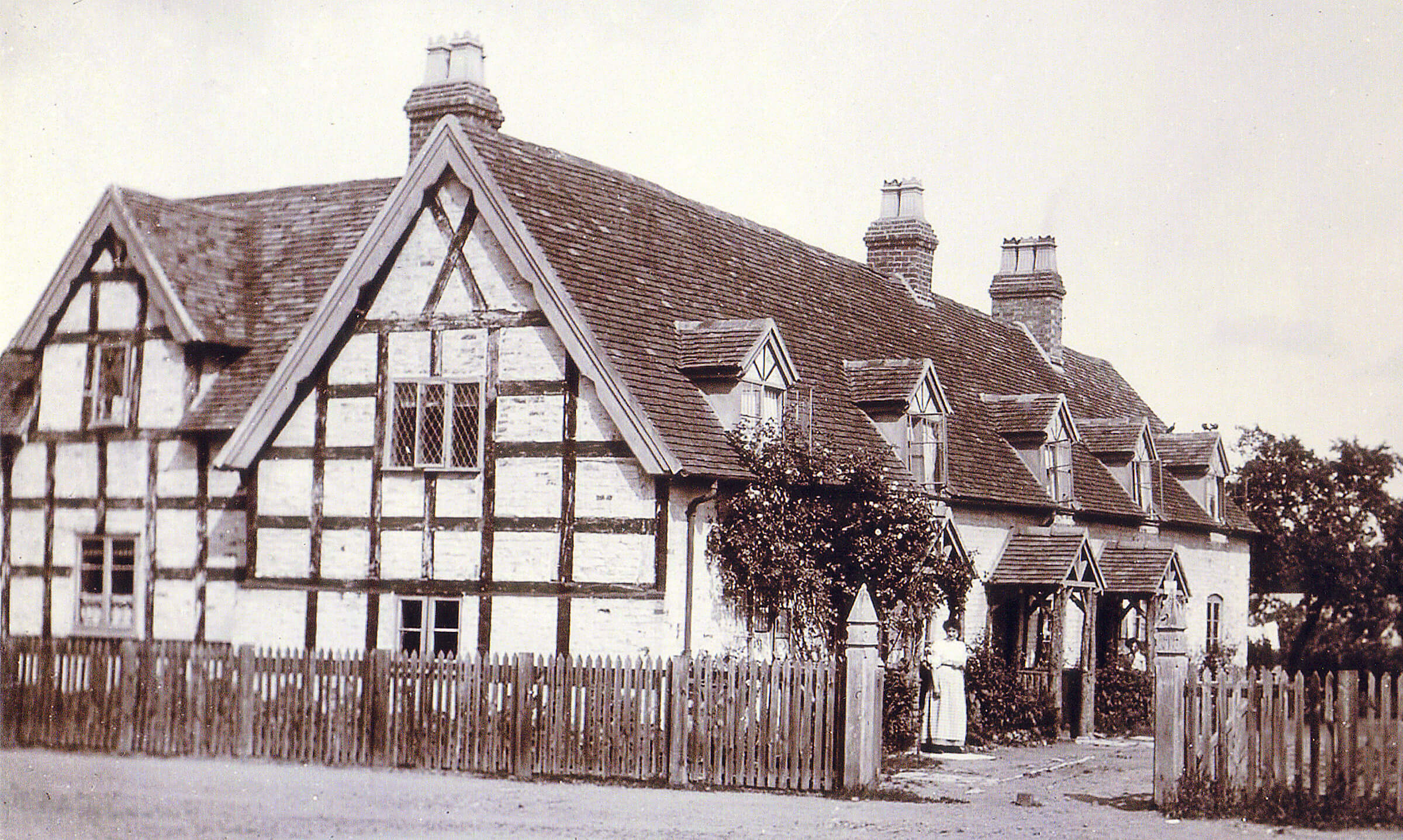
1Wick House
Pictured in 1910 (demolished c1962 now the site of Wick House Close).
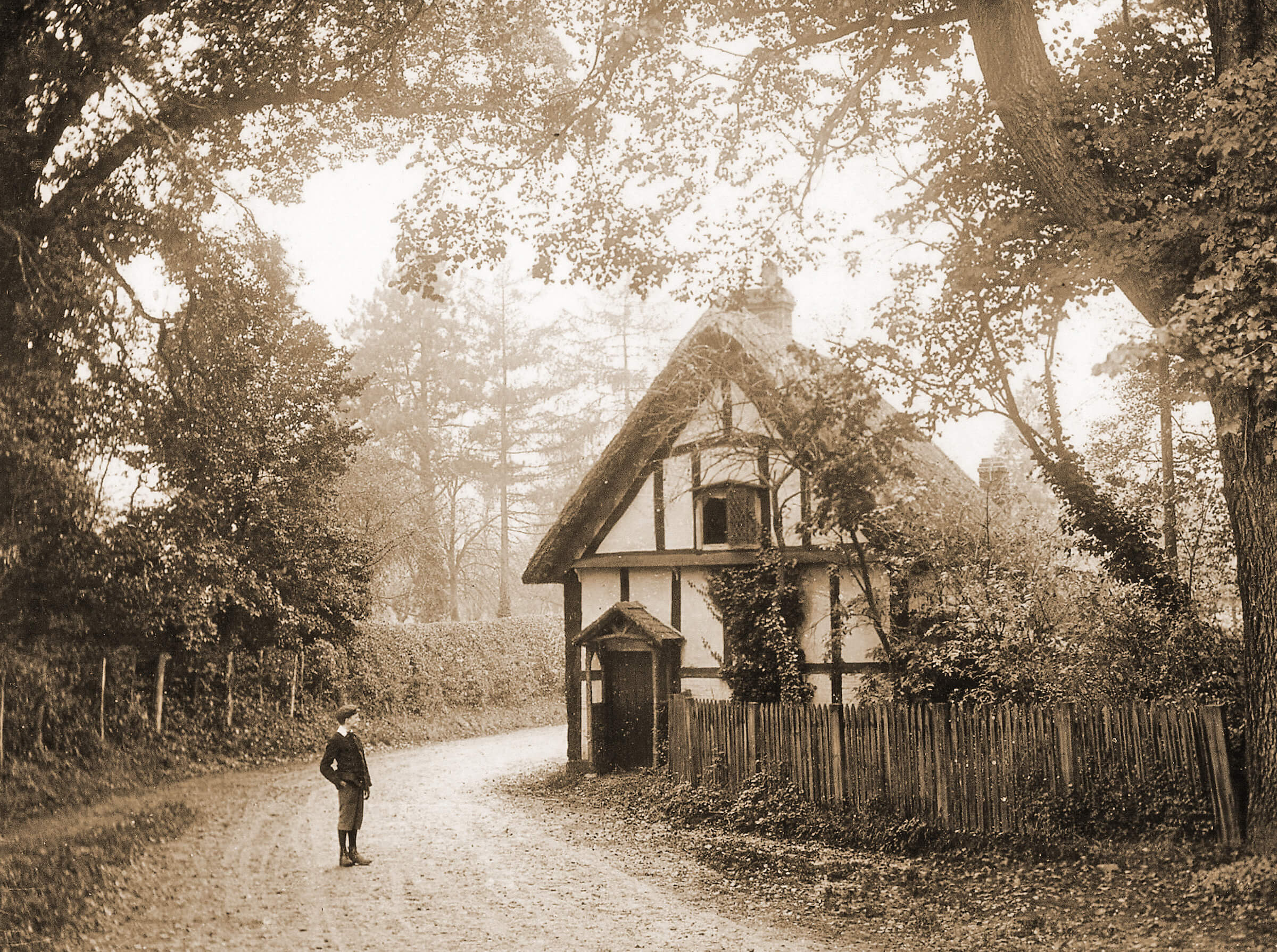
2Yew Tree Cottage
Looking back towards Waylands in c1900.
3Ruyhals Place
Martha Stevenson's post office in c1900.
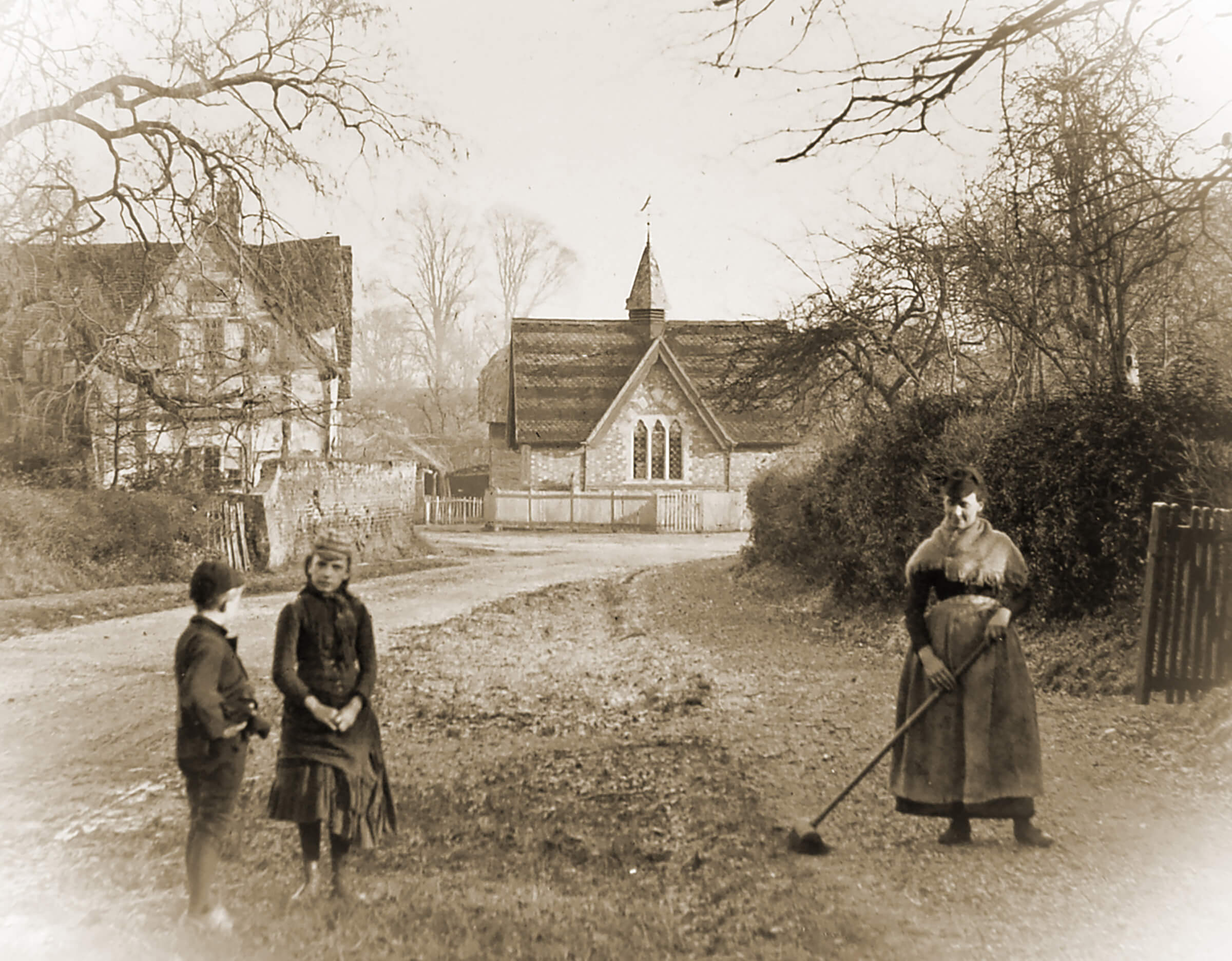
4Wick School
Centre in picture. Built 1860s, closed 1943.
 6 Photos - Click to View
Further Articles Relating to Wick School
- Wick Parochial School and the Growth of Education [PDF / 1.6Mb]
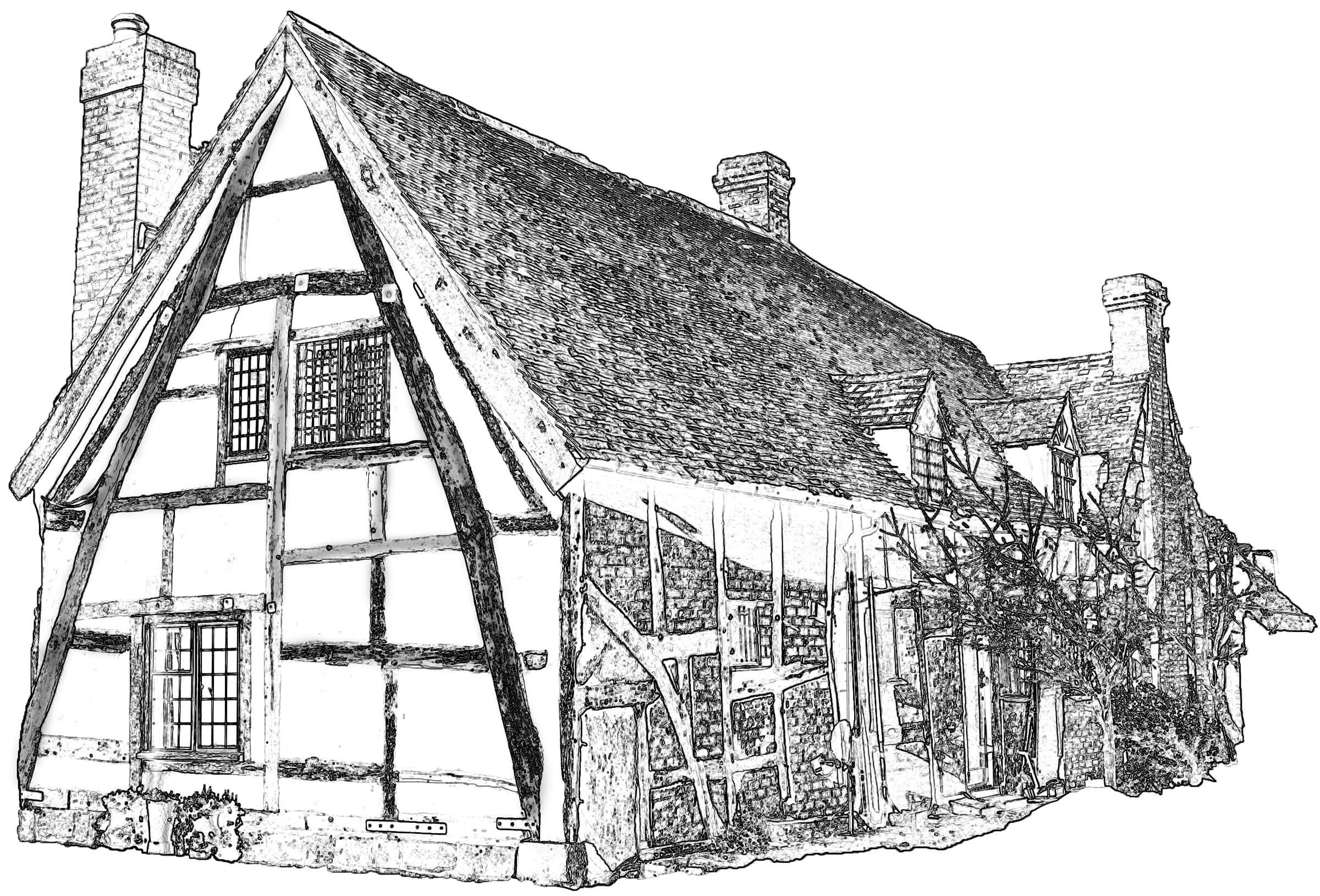
5Cruck House
Wick has a number of timbered houses from the late medieval times. Five of the oldest among them are cruck-built, where two curved timbers are split from one tree. They rise from the floor then join at the top to create one end of a frame, with another cruck-frame at the other end, joined by a long beam to create a secure structure. You can see an example on the end of the house opposite the play-ground.
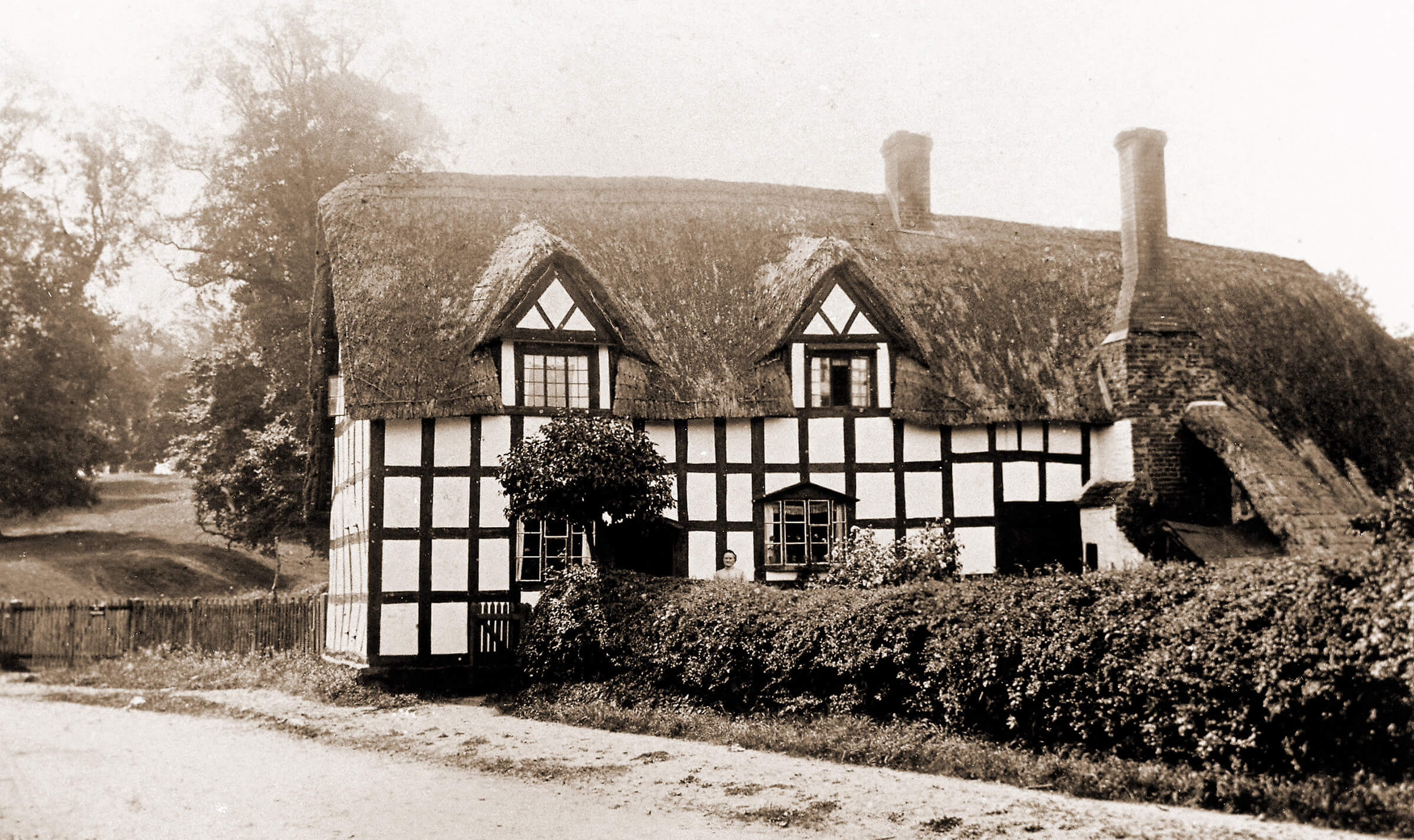
6Gardener's Cottage
Pictured in c1900. The site of the playground is in the background.
Wick Club History
Wick Club was first established as a 'Working Men's Club' in October 1890, and during its first session it met in a room of a house which fronts down the street. During its second year, from October 1891 to March 1892, it met in the village room at Wick House which was lent for the purposes by Mr. A. R. Hudson.
The present Club Room was built in 1892 on land donated by the Rev. C. H. Bickerton Hudson, in accordance with a promise given by his father, Mr. C. S. Hudson.
However, before the Club could take proper possession of the building Wick Church had to be closed for restoration and enlarging, and during this time, from August 1892 until October 1893, the Club was licensed for the "performance therein of divine service" by the Bishop of Worcester. Attached is a photocopy of the document.
The Club Room was built by Messrs. Nicholas Brothers, of Pershore. The donors to the Building Fund were:
• Mrs. J. Hilditch Evans - £75
• Mr. A. R. Hudson - £50
• Major Marriott - £50
• Mr. E. Bomford - £10
• Mr. Hugh Robinson - £5
Mrs. Hilditch Evans turns out to have been the owner of what is now called "Lower Hill" but then was called "Bryn Issa". On her death the house was bought by the Dowson family.
Dated 4th. March, 1996.